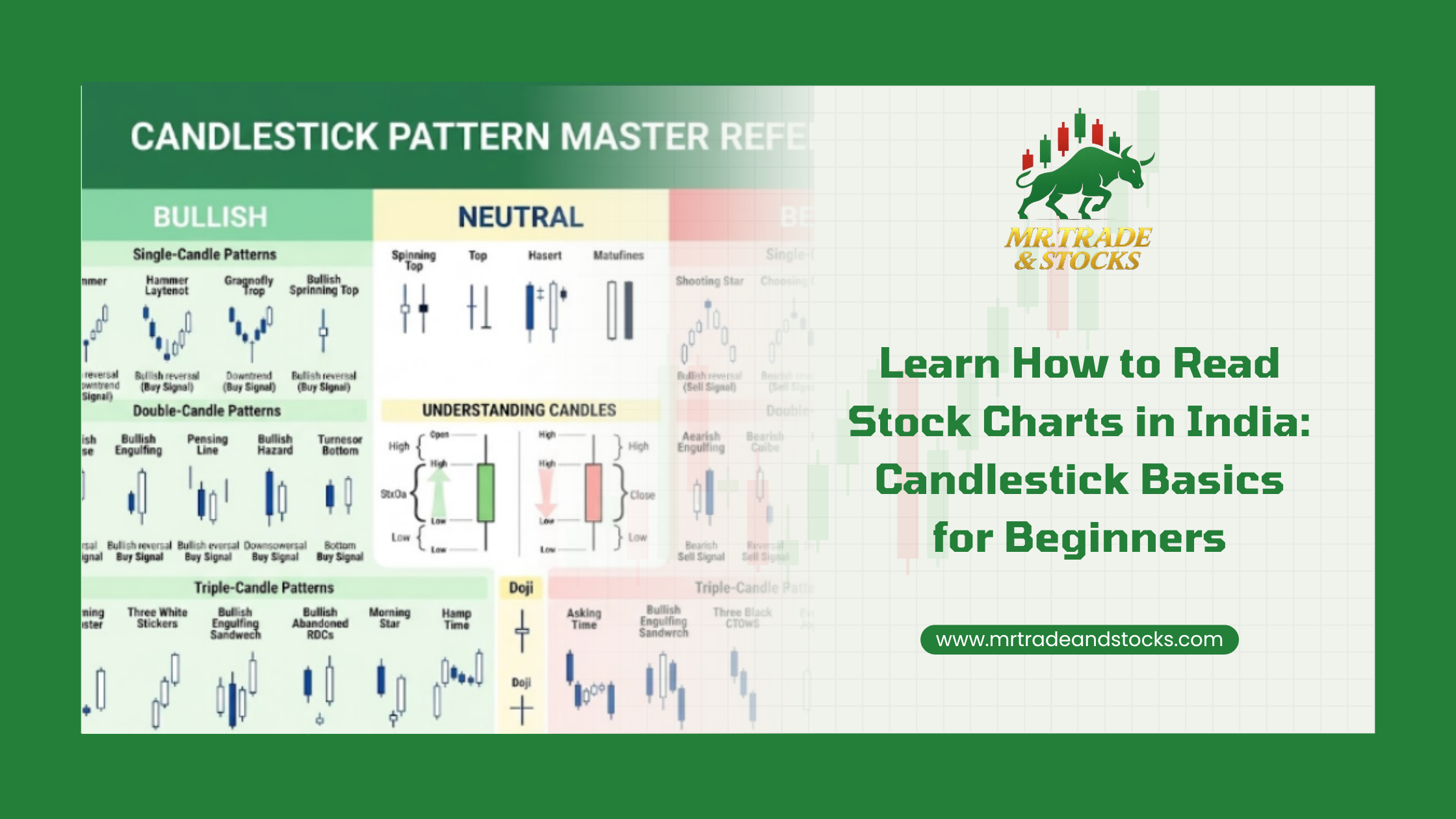
Are you struggling to understand candlestick charts? You’re not alone! For many beginners, diving into stock trading and interpreting candlestick charts can be overwhelming. The good news? It’s easier than you think! In this guide, we’ll break down candlestick charts into manageable pieces, helping you grasp how they work and how to incorporate them into your trading strategy. Whether you’re new to the world of share trading in Hisar or looking to sharpen your skills, by the end of this blog, you’ll have a solid understanding of how to read candlestick charts and make smarter, more informed trading decisions. Candlestick charts are one of the most effective ways to track price movements in stock market trading. Each candlestick displays four essential prices: the open, close, high, and low. By interpreting these charts, traders can identify market trends, spot potential reversals, and pinpoint optimal buying or selling opportunities. Understanding candlestick patterns is crucial for stock trading beginners in Hisar who want to predict future price movements. The beauty of candlestick charts lies in their ability to visually show market sentiment, making them a valuable tool for both novice and experienced traders alike. For a more in-depth look into advanced trading courses in Hisar, consider exploring our Stock Market Institute in Hisar for expert-led lessons. What is a Candlestick Chart? Candlestick charts are one of the most popular ways to track price movements in the stock market. Each “candlestick” represents the trading action during a specific time period. Here’s how it works: The body of the candlestick represents the difference between the open and close prices, and the wick (or shadow) shows the highest and lowest points. These charts are easy to read and provide essential insights into the market. Why should you care about learning to read candlestick charts? Here’s why: Candlestick charts are a powerful tool for traders, helping you quickly identify trends, understand market sentiment, and make smarter trading decisions. How Candlestick Charts Work Alright, now that you know what candlestick charts are, let’s dive into how they work. To read a candlestick chart, focus on the open, close, high, and low prices. Look for patterns to help you understand the market sentiment and identify trends. Benefits of Reading Candlestick Charts You might be wondering, “How does this help me as a trader?” Here are some reasons why candlestick charts are essential: Candlestick charts give you the ability to predict price movement, identify reversals, and time your trades more accurately. Comparison with Alternatives There are other types of charts available for traders. Let’s see how candlestick charts stack up against them: Feature Candlestick Charts Line Charts Bar Charts Ease of Use Simple to understand Very basic, not detailed Moderate to complex Price Action Detail High Low Moderate Market Sentiment Clearly visible Not visible Visible Trend Identification Easy to spot trends Not ideal for trends Good for trends Pattern Recognition Great for patterns Poor pattern recognition Moderate for patterns Candlestick charts provide a more detailed, visual way to track trends and market sentiment, making them a better choice than line or bar charts for many traders. Who is a Good Candidate for Reading Candlestick Charts? Candlestick charts aren’t just for professional traders—they can benefit anyone involved in stock trading, especially: Whether you’re a beginner, an active trader, or a local investor in Hisar, candlestick charts are a great tool for improving your trading strategies. Pricing Factors So, how much does it cost to learn to read candlestick charts? Fortunately, you don’t need to break the bank: Learning to read candlestick charts is affordable, with many free resources available and affordable courses for deeper learning. Industry Trends in 2026 As we move towards 2026, candlestick charting will evolve with new technologies. Here’s what to expect: The future of candlestick charting includes AI and automation, which will help make chart reading even more efficient and accurate. Why Choose Mr. Trade and Stocks in Hisar, Haryana? At Mr. Trade and Stocks, we believe in empowering traders with the skills they need to succeed. Our courses teach you everything from the basics of candlestick chart reading to advanced trading strategies. For expert-led, practical, and beginner-friendly stock trading education, Mr. Trade and Stocks in Hisar is your go-to institute. FAQs 1. What are candlestick charts used for?Candlestick charts are used to analyze stock price movements, identify trends, and predict future price behavior. 2. Are candlestick charts easy to learn for beginners?Yes, they are beginner-friendly and provide a simple, visual way to understand market action. 3. How do candlestick patterns help traders?Candlestick patterns can signal potential trend reversals, helping traders make better entry and exit decisions. 4. What time frame should I use for candlestick charts?It depends on your trading style. Day traders typically use shorter time frames (minutes), while long-term investors use longer ones (days or weeks). 5. Can I use candlestick charts for crypto trading?Absolutely! Candlestick charts are used in all markets, including stocks, forex, and cryptocurrencies. Ready to improve your stock trading skills? Enroll at Mr. Trade and Stocks today, and master candlestick charts and other essential trading techniques. Join our course in Hisar, Haryana, and start trading with confidence!
What is Risk Management in Trading? Protect Your Capital First
Ever felt confident about a trade only to see it go completely wrong? It happens more often than you think. Many beginners enter the market with excitement, hoping to make quick profits. But after a few losses, reality hits hard. The problem isn’t always the strategy, it’s the lack of protection. That’s where risk management in trading becomes your safety net. Think about it. If you lose a big portion of your capital early, how will you continue trading? That’s why experienced traders don’t chase profits first, they protect what they already have. If you’re learning from a Stock trading institute in Hisar, Haryana, you’ll notice this mindset is taught from day one. Because trading isn’t just about winning trades. It’s about staying in the game long enough to grow. Let’s understand this in a simple, practical way without complicated jargon. What is Risk Management in Trading? Risk management in trading is the process of protecting your capital by controlling potential losses. It includes strategies like using stop loss India, maintaining a proper risk reward ratio India, and following strict trading discipline Hisar. The goal is not just to make profits, but to ensure long-term survival in the market.Risk management in trading simply means deciding how much you are willing to lose before entering a trade. Sounds basic, right? But this one habit can change everything. Instead of hoping the market goes your way, you prepare for the opposite. You accept that losses are part of trading and you control them. Imagine riding a bike without brakes. Would you feel safe?That’s exactly what trading without risk management feels like. With proper planning, you limit your losses, protect your capital, and trade with clarity instead of fear. It’s not about avoiding losses completely. It’s about keeping them small. Why is Risk Management Important in Trading? Let’s be honest, losses are unavoidable in trading. But big losses are preventable. Here’s why risk management matters so much: If you lose 50 percent of your capital, you need 100 percent profit just to recover. That’s not easy. This is why traders in a Stock trading institute in Hisar, Haryana are trained to think differently. They focus on survival first. Big losses destroy accountsSmall controlled losses build long-term success How Does Risk Management Work? Let’s break it down into easy steps you can actually follow. Step 1: Decide Your Risk Per Trade Before entering a trade, ask yourselfHow much am I okay losing here This keeps your losses manageable. Step 2: Always Use Stop Loss A stop loss India is your exit plan. It automatically closes your trade if the price goes against you. No emotions. No second-guessing. Skipping stop loss is like saying let’s see what happens. That rarely ends well. Step 3: Maintain Risk Reward Ratio This is where smart trading begins. Even if you win fewer trades, you can still be profitable. Step 4: Manage Position Size Don’t go all in. Adjust your quantity based on your risk. This is called position sizing, and it quietly protects your capital. Step 5: Stick to Discipline This is the hardest part. You know the rules. But will you follow them? This is where real traders stand out. Control risk, use stop loss, follow rules, stay consistent Benefits of Risk Management in Trading Once you start following risk management, you’ll notice a shift, not just in results, but in mindset. Real-life example A beginner in Hisar started trading with 50,000. In the first month, he lost nearly half because there was no stop loss and no plan. After joining a Stock trading institute in Hisar, Haryana, he learned to risk only 2 percent per trade. Losses became smaller, confidence improved, and slowly, profits followed. That’s the difference structure makes. Trading Without Risk Management vs With Risk Management Factor Without Risk Management With Risk Management Loss Control No control Limited losses Emotional Stability Stress and panic Calm decisions Consistency Random results Stable performance Capital Protection High risk Strong protection Growth Short-term Long-term Who Should Use Risk Management? Honestly, anyone who wants to survive in trading. But it’s especially important for: If you’re trading without it, you’re relying on luck. And luck doesn’t last long. Pricing Factors Here’s the interesting part. Risk management itself doesn’t cost anything. But learning it the right way does matter. You might invest in: At a Stock trading institute in Hisar, Haryana, you don’t just learn theory. You see how risk management works in real-time markets. One avoided big loss can recover your learning cost. Industry Trends in 2026 Trading is changing, and risk management is becoming more advanced. Here’s what’s happening: Today’s traders are smarter. They don’t just ask how much can I earnThey ask how much can I lose safely Modern trading focuses on risk first and profit second Why Choose Mr Trade and Stocks in Hisar, Haryana? Learning trading alone can be confusing. You try strategies, watch videos, follow tips, but something still feels missing. That missing piece is structured guidance. At Mr Trade and Stocks, the focus is clear: Instead of trial and error, you follow a proven path. And that makes all the difference. FAQs Let’s be real, trading isn’t about being right every time. It’s about staying strong even when you’re wrong. If you want to trade confidently, start with the basics that actually matter. Learn how to protect your capitalBuild real trading disciplineTrain with experts at Mr Trade and StocksJoin a trusted Stock trading institute in Hisar, Haryana Because at the end of the day, the traders who survive are the ones who win.

New to Trading in Hisar? Avoid These 5 Costly Stock Market Mistakes
Starting your stock trading journey can be both thrilling and overwhelming. The idea of making money from the stock market is exciting, but the path is often filled with obstacles. Whether you’re learning at a stock trading institute in Hisar, Haryana or exploring on your own, there are some common mistakes that many new traders make. The good news? They’re avoidable! In this blog, we’ll walk you through the top 5 mistakes you need to steer clear of as a beginner trader in Hisar. Introduction: Navigating the Stock Market Maze in Hisar It’s natural to feel both excited and intimidated when you first dive into stock trading. In Hisar, like in any other city, many beginners make mistakes that can result in frustrating losses. But don’t worry—by learning from these missteps early on, you can avoid costly errors and set yourself up for long-term success. Are you ready to take control of your trading journey? If yes, then let’s talk about the five critical mistakes every new trader in Hisar must avoid. By understanding these pitfalls, you can avoid unnecessary risks and take more confident steps forward. Starting out in stock trading can be tricky, especially with mistakes like emotional trading, overtrading, and ignoring risk management. Learning to avoid these errors early on will help you set a strong foundation for success. What is Stock Trading? Stock trading is simply buying and selling shares of companies in the stock market to make a profit. Sounds simple enough, right? But as you’ll soon discover, trading involves a lot more than just hitting “buy” or “sell.” It’s about understanding market trends, analyzing data, and knowing when to make your move. In Hisar, whether you’re just starting or have some experience, enrolling at a stock trading institute can really give you the tools you need to understand these market nuances and take your trading to the next level. Causes / Importance / Need: Why Avoiding These Mistakes is Crucial Here’s why avoiding these common trading mistakes is essential: Top 5 Mistakes Every New Trader Must Avoid 1. Overtrading What is overtrading?Overtrading happens when you trade too frequently, often driven by excitement or the fear of missing out (FOMO). While it may feel like you’re taking action, it can quickly burn through your capital and leave you with more losses than gains. How it works: Benefits of avoiding overtrading: 2. Ignoring Risk Management What is risk management in stock trading?Risk management is a key aspect of trading. It’s about protecting your capital and knowing how much to risk on each trade. Unfortunately, many new traders fail to set stop-loss orders or even learn about them, putting their investments at great risk. How it works: Benefits of risk management: 3. Emotional Trading What is emotional trading?Emotional trading happens when your feelings, like fear or greed, influence your trading decisions. For example, you might sell stocks too quickly out of panic during a downturn, or hold onto a losing trade out of hope. How it works: Benefits of controlling emotions: 4. Lack of a Trading Strategy What is a trading strategy?A trading strategy is a well-thought-out plan that defines your goals, risk management rules, and how you decide when to buy and sell stocks. Without a strategy, you’re essentially gambling with your money, hoping for the best. How it works: Benefits of having a strategy: 5. Failing to Keep Learning Why is continual learning important?The stock market is always changing, and so are the tools and techniques used by successful traders. Failing to stay updated and continuing your education could leave you behind while others take the lead. How it works: Benefits of continuous learning: By avoiding mistakes like overtrading, ignoring risk management, emotional trading, lack of strategy, and failing to keep learning, you can dramatically improve your chances of success in stock trading. Comparison with Alternatives: Trading with and Without Proper Training Aspect Trading Without Training Trading with Proper Training Knowledge Limited understanding In-depth understanding of strategies Risk Management Ignored or mismanaged Clear, structured risk management Trading Decisions Impulsive and emotional Rational, calculated, and strategic Profit Potential Low due to mistakes Higher with disciplined approach Who is a Good Candidate for Stock Trading? Stock trading isn’t for everyone, but it could be perfect for you if: In Hisar, anyone interested in learning how to trade can benefit from the resources available at a stock trading institute. Cost / Pricing Factors The cost of getting started in stock trading can vary. Some of the factors include: Industry Trends in 2026: What to Expect Why Choose Mr. Trade and Stocks in Hisar? At Mr. Trade and Stocks, we specialize in providing quality trading education tailored to both beginners and experienced traders in Hisar, Haryana. Here’s why you should choose us: Join us at Mr. Trade and Stocks to start your trading journey today with the right knowledge and strategy in place. FAQs: Common Questions About Stock Trading in Hisar Q1: How can I avoid emotional trading?A1: Stick to a clear strategy, set stop-loss orders, and avoid making decisions based on fear or greed. Q2: How much money do I need to start trading?A2: You can start with as little as ₹10,000, but your capital will depend on your goals and risk tolerance. Q3: Can beginners make a profit in stock trading?A3: Yes, but it takes patience, a solid strategy, and the right education. Q4: What’s the best way to start learning about stock trading?A4: Enroll in a reputable stock trading institute in Hisar to get structured education and hands-on experience. Q5: Is trading risky in Hisar?A5: Like any form of investment, stock trading carries risks, but with the right knowledge and risk management, you can minimize those risks. Ready to take your trading skills to the next level? Don’t let these common mistakes hold you back. Sign up at Mr. Trade and Stocks in Hisar today and start your journey towards becoming a successful stock trader!
What is Fundamental Analysis? Best Guide for Beginners in Hisar Haryana
If you’ve ever looked at a stock and thought, “Should I buy this or stay away?” you’re not alone. Many beginners in Hisar, Haryana enter the stock market with excitement, but also confusion. Some follow tips from friends, others rely on social media. And for a while, it might feel like things are working until they’re not. That’s when the big question hits: “What am I doing wrong?” The answer is simple. Most people skip the basics. You don’t need luck to succeed in the market. You need understanding. That’s exactly where fundamental analysis comes in. It helps you look beyond the stock price and actually understand the company behind it. Whether you’re learning at a Stock trading institute in Hisar, Haryana or just getting started on your own, this is the skill that builds real confidence. Let’s break it down in the simplest way possible. Fundamental analysis is a method of evaluating a company’s financial health, performance, and future potential to determine whether its stock is undervalued or overvalued. It involves analyzing financial statements, industry trends, and economic factors to make informed long-term investment decisions. What is Fundamental Analysis? Think of fundamental analysis like doing a background check before trusting someone with your money. Instead of asking, “Is this stock going up?” you ask, “Is this company actually strong?” You study In simple terms, you’re trying to figure out the real value of a company, not just what the market says. This is the core idea behind stock valuation basics. A quick exampleImagine two companies Which one is better Fundamental analysis helps you answer that with logic, not guesswork. Focus Company strengthGoal Find true valueBest for Long-term investorsTools Financial statements, ratios, industry data Why is Fundamental Analysis Important? Let’s be honest most losses in the stock market don’t happen because the market is bad. They happen because decisions are rushed or emotional. Ever bought a stock just because someone said, “This will go up fast?”You’re not alone. That’s exactly what fundamental analysis protects you from. Why it matters Real life connectionMany successful investors in India don’t trade daily. They invest after deep company analysis India methods and hold for years. Avoid emotional decisionsChoose quality over hypeInvest with clarity How Fundamental Analysis Works Let’s not overcomplicate it. Here’s how it actually works in real life. Step 1 Understand the Business Start simple Ask yourself Example A company making essential products usually has stable demand. Step 2 Check Financial Statements Now look at numbers but don’t worry it’s easier than it sounds Focus on This is where financial ratios basics start making sense. Step 3 Analyze Key Ratios These are like shortcuts to understanding performance At first these might feel confusing but with practice they become second nature. Step 4 Study Industry and Market Trends Even a great company can struggle in a weak industry Ask Example Tech companies grow faster than traditional sectors in certain phases. Step 5 Compare with Competitors Never look at a company in isolation Compare This step is often taught deeply in stock research Hisar based programs. Step 6 Decide the Fair Value Now comes the key questionIs this stock worth its price If it’s undervalued opportunityIf it’s overpriced risk Simple but powerful. Learn Understand Analyze Compare Decide Invest Benefits of Fundamental Analysis So why do experienced investors stick to this method Because it works consistently. Key advantages A relatable thoughtWould you rather gamble or invest with confidence That’s the difference. Many investors across India use this as the base of their investing guide India strategy. Stable approachIdeal for beginnersBuilds strong investing habits Fundamental Analysis vs Technical Analysis People often get confused between these two. Here’s a simple way to look at it Feature Fundamental Analysis Technical AnalysisFocus Company value Price chartsTimeframe Long term Short termTools Financial data Indicators and patternsRisk Level Lower comparatively HigherBest For Investors Traders Think of it this wayFundamentals tell you what to buyTechnical tells you when to buy Fundamentals ValueTechnical TimingBest results Combination Who Should Learn Fundamental Analysis? You might be thinking is this really for me If any of these sound familiar the answer is yes. Ideal for If you’re learning at a Stock trading institute in Hisar, Haryana this is usually the first and most important skill you’ll build. Beginner friendlyNo finance background neededHigh long term value Cost / Pricing Here’s something many people worry about do I need to spend a lot to learn this Not really but how you learn makes a big difference. Your options What affects pricing In places like Hisar, Haryana guided learning often helps you avoid months of confusion. Free AwarenessPaid UnderstandingMentorship Confidence Industry Trends in 2026 The investing world is changing fast. And honestly it’s becoming more competitive too. What’s happening right now India insightIndia has crossed 15 plus crore Demat accounts showing how quickly participation is growing. So the real question isWill you just participate or actually understand the market That’s where company analysis India skills become powerful. More competitionMore opportunitiesKnowledge is your edge Why Choose Mr Trade and Stocks in Hisar Haryana? Learning from random sources can leave you with half knowledge and that’s risky in the stock market. You need clarity. You need structure. And most importantly you need practical experience. Why Mr Trade and Stocks is a strong choice Many students prefer a Stock trading institute in Hisar, Haryana like this because they can ask questions practice live and actually understand what they’re doing. Learn clearlyPractice confidentlyGrow consistently FAQs 1 What is fundamental analysis in simple wordsFundamental analysis means studying a company’s financial health and performance to decide whether its stock is worth investing in. 2 Is fundamental analysis good for beginnersYes it is one of the safest and most effective ways for beginners to start understanding the stock market. 3 What are the basic tools of fundamental analysisFinancial statements ratios like P E and ROE debt levels and industry analysis are the key tools. 4 Can I learn fundamental analysis without a finance backgroundAbsolutely with proper
Technical Analysis Explained for Beginners in Hisar, Haryana
Ever opened a stock chart and thought, “What am I even looking at?” You’re not the only one. Many beginners in Hisar step into trading with excitement but without clarity. They follow tips from friends, watch random videos, or act on news—and then feel stuck when things don’t go their way. It can be frustrating, right? The truth is, the market isn’t as confusing as it looks. Prices don’t move randomly. They follow patterns—and once you learn how to read them, everything starts making more sense. That’s exactly what technical analysis helps you do. Whether you want to trade daily or just understand short-term moves, learning chart reading India style can completely change how you see the market. It shifts you from guessing to understanding. If you’re planning to join a Stock trading institute in Hisar, Haryana, this is one skill you simply can’t ignore. Let’s break it down in the simplest way possible. Technical analysis is the study of stock price movements using charts, patterns, and indicators. It helps traders identify trends, entry points, and exit signals based on historical data. Instead of guessing, traders use chart reading, candlestick patterns, and indicators to make smarter trading decisions. What is Technical Analysis? Think of technical analysis like reading the “story” of a stock. Instead of checking company reports or news, you focus on what the price is doing right now—and what it has done before. It mainly includes: The core idea is simple: Markets leave clues. You just need to learn how to read them. For example, imagine a stock that keeps bouncing from the same price level again and again. That tells you the level is important—and traders are watching it. That’s exactly what you learn in technical trading course programs. Why is Technical Analysis Important? Let’s be honest—trading without a plan feels like gambling. Technical analysis gives you that plan. Here’s why it matters: In places like Hisar, more learners are now focusing on candlestick patterns Hisar traders use daily because they actually work in real market conditions. No technical analysis = Confusion and guessworkWith technical analysis = Clarity and confidence How Does Technical Analysis Work? Let’s keep this simple and practical. Step 1: Understand the Chart Type Most traders prefer candlestick charts. Why? Because they show more detail in one glance: Once you get used to it, it feels natural. Step 2: Identify the Trend Before doing anything, ask: “Is the market going up, down, or nowhere?” This one step alone can save you from many bad trades. Step 3: Learn Support & Resistance These are like invisible walls on the chart. For example, if a stock falls to ₹100 again and again but never breaks below, that’s support. Would you buy near support or randomly in the middle? The answer is clear. Step 4: Use Indicators Indicators act like helpers. They don’t predict but they guide. Popular ones in trading indicators India include: They help confirm what the chart is already showing. Step 5: Read Candlestick Patterns This is where charts start “talking.” Some common patterns: Learning candlestick patterns Hisar traders rely on can give you an edge. Step 6: Combine Everything No single tool is enough. Real trading is about combining: That’s how professionals think. Mini Summary Box Charts + Logic + Patience = Better Trading Decisions Benefits of Technical Analysis Once you start understanding charts, something interesting happens—you stop feeling lost. Here’s what changes: Real-life example: A beginner in Hisar once bought stocks based on WhatsApp tips. Sometimes profit, mostly loss. After learning from a Stock trading institute in Hisar, Haryana, he started waiting for proper setups. Fewer trades but better results. That’s the difference. Technical Analysis vs Fundamental Analysis Feature Technical Analysis Fundamental Analysis Focus Price & Charts Company Data Timeframe Short-term Long-term Tools Indicators, Patterns Financial Reports Decision Style Quick decisions Slow decisions Best For Active traders Long-term investors Many traders in India use both. But if you’re just starting with stock chart basics, technical analysis is usually the first step. Who Should Learn Technical Analysis? If you’re wondering, “Is this for me?” the answer is probably yes. It’s ideal for: If you want consistency, learning chart reading India methods is essential. Cost / Pricing Factors Let’s talk about investment—because learning is also an investment. Course pricing depends on: Typical cost in Hisar: But here’s something to think about: Is a cheaper course really saving you money if it doesn’t teach you properly? Industry Trends in 2026 Trading is changing fast. Here’s what’s happening in 2026: Today, traders don’t just learn—they practice in real-time. That’s why choosing the right Stock trading institute in Hisar, Haryana is more important than ever. Why Choose Mr Trade and Stocks in Hisar, Haryana? The right mentor can save you months or even years of struggle. Mr Trade and Stocks focuses on what actually matters: Many learners in Hisar start from zero. No knowledge, no confidence. And slowly, things change. They understand charts, take better trades and grow. FAQs 1. Can I learn technical analysis in 5 minutes? You can understand the basics quickly. But real skill comes with practice and market experience. 2. Is technical analysis enough for trading? For short-term trading, yes. But combining it with fundamentals gives stronger results. 3. Which is the best chart for beginners? Candlestick charts are the most popular and easiest to understand. 4. Do I need math for technical analysis? Not really. Basic understanding is enough. 5. Where can I learn technical analysis in Hisar? You can join a Stock trading institute in Hisar, Haryana like Mr Trade and Stocks for structured and practical learning. Still feeling confused when you see a chart? That’s okay. Everyone starts there. But you don’t have to stay there. Join Mr Trade and Stocks, a trusted Stock trading institute in Hisar, Haryana, and learn how to read charts the right way. No guessing. No confusion. Just clear understanding. Start your trading journey today with the right knowledge.

Top 7 Stock Trading Apps in India 2026 Ranked for Beginners and Pros
If you’re thinking about starting your trading journey in 2026, you’ve probably already asked yourself which app should I use It’s a fair question. With so many stock trading apps in India claiming to be the best, it’s easy to feel overwhelmed. Some look simple but lack depth. Others are powerful but confusing for beginners And honestly, many people from places like Hisar, Haryana jump into trading just by downloading an app without really understanding how the market works. That’s where things go wrong Because here’s the truthThe app doesn’t make you money. Your decisions do That’s why many learners today don’t just rely on apps. They also explore structured learning through a Banking Training Institute in Maharashtra or enroll in programs like Retail Banking Course in Maharashtra to understand how money, markets, and risk actually work Think about it would you drive a car without learning first This blog will walk you through the best stock trading apps in India 2026 in a simple, honest way. No hype. Just clarityThe best stock trading apps in India in 2026 include Zerodha, Upstox, Angel One, Groww, and ICICI Direct. These apps offer features like low brokerage, advanced charts, and easy mobile trading. However, choosing the right app depends on your experience level, trading style, and understanding of financial markets What is a Stock Trading App A stock trading app is basically your digital gateway to the stock market It’s a mobile or web platform where you can In simple words, it connects you directly to stock exchanges like NSE and BSE But here’s something importantJust having access doesn’t mean you’re ready That’s why many beginners also look at These programs help you understand how financial systems work before you start risking real money Trading app is a toolKnowledge is power Why Do You Need a Good Trading App Let’s be honest every second matters in trading Imagine placing a trade and your app lags for just a few seconds. That small delay can cost you money Here’s why choosing the right app actually matters A small exampleA beginner trader from Hisar, Haryana once switched from a slow app to a faster one. Same strategy, same market but better execution improved results noticeably Speed accuracy and simplicity lead to better trades How Stock Trading Apps Work If you’re new, don’t worry. It’s simpler than it looks Steps: 1 Open a Demat and Trading AccountYou sign up using PAN, Aadhaar, and bank details 2 Login to the AppYou get access to your dashboard and watchlist 3 Analyze StocksCheck charts, news, and price movements 4 Place a TradeBuy or sell with a few taps 5 Track Your PerformanceSee profits, losses, and overall growth Learn analyze trade and review Now here’s a questionDo most beginners follow this processNot really. Many skip analysis and jump straight to trading and that’s where losses begin Best Stock Trading Apps in India 2026 Let’s talk about the apps that actually stand out Zerodha Kite Upstox Groww Angel One ICICI Direct Mini Summary BoxNew to trading try Groww or UpstoxWant advanced tools Zerodha is strong Benefits of Using Trading Apps Why are trading apps so popular today Because they make things easy Real life exampleA working professional in Hisar, Haryana started trading part time using a mobile app. Initially results were random. But once he combined app usage with proper learning, his decisions became more consistent Convenience and control define modern trading Trading Apps vs Traditional Brokers Feature Trading Apps Traditional Brokers Speed Instant Slow Cost Low High Accessibility Mobile based Office based Tools Advanced Limited Ease of Use High Moderate Trading apps are built for today’s fast moving market Who is a good candidate Who needs this You don’t need to be a finance expert to start Stock trading apps are suitable for But here’s something to think aboutWould you trust your money without understanding the basics That’s why many learners also explore Because knowledge reduces mistakes Cost Pricing Factors Most trading apps are affordable but don’t get fooled by free claims Here’s what you usually pay Also check for Low cost matters but transparency matters more Industry trends in 2026 Trading in India is changing fast Here’s what’s happening India now has over 150 million Demat accounts showing massive growth And yes even cities like Hisar, Haryana are seeing a rise in young traders exploring financial markets Why Choose Mr Trade and Stocks in Hisar, Haryana Let’s keep it realApps can help you tradeBut they won’t teach you how to think That’s where Mr Trade and Stocks comes in They focus on They also guide learners toward structured programs like Right guidance leads to better decisions and consistent growth FAQs 1 Which is the safest trading app in IndiaApps like Zerodha ICICI Direct and Angel One are considered safe due to strong regulatory compliance 2 Can beginners use trading apps easilyYes apps like Groww and Upstox are designed to be beginner friendly 3 How much money do I need to start tradingYou can start with five hundred to one thousand rupees but proper learning is more important than capital 4 Is trading a good career option in IndiaIt can be but only if you approach it with discipline knowledge and patience 5 Do I need a course before tradingNot compulsory but highly recommended Programs like PGCRBF Training Program in Maharashtra help build a strong base If you’re planning to start trading in 2026 don’t rush Pause for a moment and ask yourselfAm I ready or just excited Because downloading an app is easyMaking consistent profits takes skill Start learning with Mr Trade and StocksBuild real understanding before investing moneyTake control of your financial journey In the end apps execute trades but knowledge builds wealth

How to Start Trading with ₹1000 in Hisar, Haryana (Beginner Guide 2026)
Many beginners in India believe that trading requires lakhs of rupees. That’s where most people get stuck before even starting. If you’re in Hisar or anywhere in India, you might be wondering: “Can I really start trading with just ₹1000?” The answer is yes—but only if you follow the right approach. The biggest mistake beginners make is jumping into trading without a plan. They either lose money quickly or give up due to confusion. Small capital doesn’t mean small opportunity—it just means you need smarter strategies. This guide is designed to give you a clear, realistic roadmap. Whether you’re exploring small capital trading India or looking for guidance from a Stock trading institute in Hisar, Haryana, this blog will help you start with clarity, confidence, and control. Can You Start Trading with ₹1000 in India? Yes, you can start trading with ₹1000 in India by focusing on low-risk strategies, learning basic market concepts, and using beginner-friendly platforms. Start small, avoid high-risk trades, and follow a structured trading roadmap to gradually build skills and capital over time. What is Trading with ₹1000? Trading with ₹1000 means entering the stock market with a small capital and focusing on learning, discipline, and risk management rather than quick profits. It’s not about making big money instantly.It’s about building the foundation. With ₹1000, you typically: Think of it as your training capital. Why Do Beginners Start with Small Capital? Starting small is not a limitation—it’s a strategy. Here’s why it matters: Small capital = Low risk + High learning + Strong foundation How to Start Trading with ₹1000? Let’s break this down into a simple, practical process. Step 1: Open a Demat & Trading Account Choose a beginner-friendly broker with low charges. You’ll need: Step 2: Learn the Basics First Before placing your first trade, understand: This is where many beginners in Hisar Haryana go wrong—they skip learning. Step 3: Focus on Low-Cost Stocks With ₹1000, you can’t diversify much. So: Step 4: Use Delivery Trading Intraday trading may seem attractive, but it’s risky for beginners. Start with: Step 5: Apply Risk Management Golden rule: Step 6: Track and Learn After each trade: Learn → Start Small → Manage Risk → Improve = Trading Growth Benefits of Starting Trading with ₹1000 Starting small gives you a strong edge. Here’s how: Real-life example:Many beginners in Hisar start with ₹1000–₹2000. Those who follow a structured trading roadmap India improve steadily compared to those chasing quick profits. Trading with ₹1000 vs Higher Capital Factor ₹1000 Trading ₹50,000+ Trading Risk Level Low High Learning Focus High Medium Profit Potential Limited Higher Emotional Pressure Low High Mistake Cost Minimal Expensive Insight: Small capital is best for learning, not earning. Who Should Start Trading with ₹1000? This approach is perfect for: If you’re just starting your stock entry guide India, this is the safest way. Cost / Pricing Factors in Small Capital Trading Even with ₹1000, costs matter. Here are key factors: Example: If your trade profit is ₹50 but charges are ₹20, your net gain is only ₹30. Lower costs = Better survival in small capital trading Industry Trends in 2026 The trading landscape is changing fast. Here’s what’s shaping small capital trading India: Data insight:India has over 13 crore Demat accounts (2025–2026), showing massive beginner entry. Why Choose Mr Trade and Stocks in Hisar Haryana? Learning from the right place can accelerate your journey. Mr Trade and Stocks, a leading Stock trading institute in Hisar, Haryana, focuses on structured learning rather than shortcuts. Here’s what makes it different: Instead of guessing, you follow a system. FAQs 1. Can I really earn money with ₹1000 in trading? Yes, but returns will be small initially. Focus on learning first, profits later. 2. Which trading type is best for beginners with low capital? Delivery trading is safer compared to intraday for beginners. 3. How much can I realistically earn from ₹1000? Expect learning gains more than financial gains. Profit depends on skill, not capital. 4. Is trading risky for beginners in India? Yes, but risk can be controlled with proper education and strategy. 5. Should I join a trading institute before starting? Yes, learning from a structured Stock trading institute in Hisar, Haryana can help avoid costly mistakes. Starting trading with ₹1000 is not about becoming rich overnight. It’s about: Most people fail because they rush.Smart traders grow because they follow a process. If you’re serious about building a trading career and want proper guidance, don’t rely on random YouTube tips. Learn the right way.Start with clarity.Grow with confidence. Take your first step today with a structured roadmap from Mr Trade and Stocks in Hisar Haryana—and turn ₹1000 into real trading knowledge that lasts a lifetime.

What Skills Do You Need to Become a Profitable Trader in 2026? (Complete Guide for Beginners in Hisar)
Let’s be honest for a moment. Most people enter trading thinking it’s a quick way to make money. You open a trading app, place a few trades, and expect profits to follow. Sounds simple, right? But then reality kicks in. Losses happen. Emotions take over. One wrong decision leads to another. And suddenly, trading feels stressful instead of exciting. Here’s the truth — it’s not the market that’s confusing. It’s the lack of the right skills. In 2026, trading is no longer just about buying low and selling high. It’s about understanding data, controlling emotions, and following a system. Whether you learn online or join a Stock trading institute in Hisar, Haryana, the foundation remains the same — skills decide your success. So instead of asking, “How do I make quick profits?”Ask this instead: “What skills do I need to survive and grow in trading?” Let’s break it down in the simplest way. To become a profitable trader in 2026, you need a combination of technical analysis, risk management, trading psychology, and discipline. These skills help you make informed decisions, control emotions, and protect capital. Learning from a Stock trading institute in Hisar, Haryana can accelerate this process with structured training and real-market exposure. What is Trading Skill Development? Think of trading like driving a car. At first, everything feels overwhelming — steering, brakes, traffic, signals. But over time, with practice, it becomes natural. Trading works the same way. Trading skill development means learning how to: It’s not about guessing what will happen next. It’s about preparing yourself to respond smartly — no matter what happens. A beginner chases profits.A skilled trader protects capital first. Why Are Trading Skills Important in 2026? Have you noticed how fast everything moves today? Markets react within seconds. News spreads instantly. Even beginners now have access to advanced tools. So what does this mean for you? Imagine entering a trade just because someone told you to… and then watching it go against you. That’s how most beginners lose money. Without proper stock trading skills Hisar, it becomes very hard to stay consistent. How It Works – Skill Development Process Becoming a profitable trader isn’t about one big breakthrough. It’s about small, consistent steps. Step 1: Learn Market Basics Understand how the market actually works. Step 2: Learn Chart Analysis This is where things start getting interesting. Step 3: Build Your Strategy Not every strategy works for everyone. You need to find what suits your personality and risk level. Step 4: Practice in Live Market This is where most real learning happens. You’ll make mistakes — and that’s okay. Step 5: Risk Management Here’s something most beginners ignore. Step 6: Continuous Improvement Look back at your trades. What worked? What didn’t? Learn → Practice → Apply → Improve → Grow Top Skills You Need to Become a Profitable Trader Now let’s talk about what actually matters. 1. Technical Analysis This helps you read the market. 2. Risk Management This is what keeps you in the game. 3. Trading Psychology Ever exited a trade too early out of fear? Or held onto a loss hoping it would recover? That’s psychology. 4. Discipline in Trading This is where most people struggle. 5. Strategy Building Your strategy should feel natural to you. 6. Market Understanding Why did the market move today? Was it news? Global trends? Understanding this gives you an edge. Mini Summary Trading vs Gambling – What’s the Difference? Let’s clear one common confusion. Feature Trading Gambling Decision Basis Data & Analysis Luck Risk Control Planned Random Strategy Yes No Consistency Possible Unpredictable Outcome Skill-based Chance-based If you’re trading without a plan, ask yourself: Are you really trading… or just hoping? Who Should Learn Trading Skills? You don’t need a finance degree to start trading. In fact, many successful traders started from completely different backgrounds. Trading can be a great option for: In places like Hisar, Haryana, more people are now taking trading seriously as a skill-based career. What is the Cost of Learning Trading? This is a common question. And honestly, it’s a valid one. The cost depends on: A good Stock trading institute in Hisar, Haryana will offer: Think about it this way: Losing money in the market without knowledge costs more than learning properly. Industry Trends in 2026 Trading is changing fast — and it’s exciting. Here’s what’s shaping the future: More retail traders are entering the market every year in India. That means one thing: Skilled traders will always stand out. Why Choose Mr Trade and Stocks in Hisar, Haryana? Choosing where you learn matters more than you think. Because the right environment can change everything. Mr Trade and Stocks focuses on: Located in Hisar, Haryana, it helps students move from confusion to clarity. You don’t just learn trading here.You learn how to think like a trader. FAQs 1. Can I become a profitable trader without any background? Yes, you can. With consistent learning and practice, anyone can build strong trading skills. 2. How long does it take to become a profitable trader? It usually takes around 6–12 months of consistent effort and learning. 3. Is trading risky? Yes, but risk can be managed with proper strategy and discipline in trading. 4. Do I need to join a stock trading institute in Hisar, Haryana? Not compulsory, but it helps you learn faster and avoid common mistakes. 5. What is the most important skill in trading? Risk management and trading psychology Haryana are the most important skills. Trading isn’t about luck. It’s about showing up every day with the right mindset, the right skills, and the right guidance. If you’re serious about becoming a profitable trader in 2026… Learn the right wayAvoid unnecessary lossesBuild real, practical skills Join Mr Trade and Stocks — a trusted Stock trading institute in Hisar, Haryana — and start your journey towards consistent and confident trading.

How Much Can You Earn from Stock Market in India (2026)? Real Income Guide for Beginners
Let’s be honest — almost everyone who thinks about the stock market has this one question in mind: “Kitna kama sakte hai actually?” And if you’ve searched online, you’ve probably seen two extremes.Some people show huge profits and luxury lifestyles… while others warn that you can lose everything. So what should you believe? If you’re someone from Hisar just starting out, here’s the truth — the stock market is neither magic nor a scam. It’s a skill-based income system. Your earnings depend on how well you understand the market, how disciplined you are, and how you manage risk. Not luck. Not shortcuts. That’s why many beginners today prefer learning from a Stock trading institute in Hisar, Haryana like Mr. Trade and Stock. Because clarity matters more than hype. In this blog, we’ll talk about real numbers, simple examples, and what you can actually expect in 2026. How Much Can You Earn from Stock Market in India? In India, beginners typically earn 3% to 8% monthly returns with proper learning and discipline. With ₹50,000 capital, this equals ₹1,500–₹4,000 per month. Experienced traders may earn 10%–15%, but consistency depends on skill, risk management, and market conditions. What is Stock Market Income? Let’s simplify it. Stock market income is the money you earn by buying and selling shares… or by holding them for some time. There are mainly three ways people earn: Sounds simple, right? But here’s the catch — it’s not instant. It grows slowly as your understanding improves. For someone in Hisar starting fresh, this is where most confusion happens. People expect quick profits, but the market rewards consistency, not speed. Stock market income = trading profits + long-term gains + dividends.It grows with time and skill, not overnight luck. Why Understanding Realistic Trading Income Matters? Have you ever seen someone enter trading with excitement… and quit in a few months? It usually happens because expectations were unrealistic. Here’s why being practical helps: Think about it — would you expect a gym result in 7 days? Probably not. Trading works the same way. That’s exactly what a good Stock trading institute in Hisar, Haryana teaches — patience over pressure. Unrealistic goals lead to frustration.Realistic expectations build long-term success. How Much Can You Actually Earn? (Real Numbers Explained) Now let’s talk numbers. No hype. Just reality. Beginner Level (0–6 months) At this stage, you’re mostly learning. Profits are small — and that’s okay. Intermediate Level (6–18 months) You start understanding patterns. Confidence builds slowly. Advanced Traders (2+ years) Now strategy, discipline, and psychology play a big role. Real-Life Example Let’s take a simple example. Aman from Hisar starts trading with ₹50,000. He earns around 6% monthly — that’s ₹3,000. Not life-changing yet, right? But now imagine he grows his capital to ₹3 lakh. Same 6% → ₹18,000/month. That’s where things start getting interesting. Income depends on: Not just “luck” or “tips”. How Does Trading Income Work? If trading still feels confusing, let’s break it down. Step 1: Market Understanding You observe trends, patterns, and how prices move. Step 2: Choose Your Style Intraday, swing, or long-term — pick what suits you. Step 3: Entry Decision You wait. Yes, waiting is part of trading. Step 4: Risk Management You set a stop-loss to limit losses. Step 5: Exit Plan You don’t stay forever. You exit with a plan. Step 6: Review You look back and learn from every trade. Simple steps… but not always easy to follow. Trading is not guessing.It’s a repeatable process built on discipline. Benefits of Earning from Stock Market So why are so many people in India exploring trading in 2026? Here’s why: But let’s be real — freedom comes with responsibility. No boss… but also no guaranteed salary. Stock market offers freedom…but only if you treat it seriously. Stock Market vs Other Income Sources (Comparison) Feature Stock Market Job Business Income Potential High (variable) Fixed High (but risky) Initial Investment Low to Medium None High Risk Level Medium to High Low High Flexibility High Low Medium Skill Dependency Very High Medium Very High If you think about it, trading is somewhere between a job and a business. Stock market is not passive income.It’s an active skill-based income source. Who is a good candidate / Who needs this? You don’t need a finance degree. But you do need the right mindset. You’re a good fit if: If you’re from Hisar and serious about learning, joining a Stock trading institute in Hisar, Haryana can give you a structured start. Anyone can start.But only disciplined people stay and grow. Cost / Pricing Factors (if applicable) Let’s talk about money — not earnings, but starting cost. Now here’s a question: Would you rather lose money learning on your own… or invest in learning first? Many beginners in Hisar choose structured training at Mr. Trade and Stock to avoid costly mistakes. Low entry cost…but learning is the real investment. Industry trends in 2026 Trading in India is changing fast. Here’s what’s happening in 2026: So the opportunity is growing… but so is competition. 2026 is full of opportunities —but only skilled traders stand out. Why Choose Mr. Trade and Stock in Hisar, Haryana Starting alone can feel confusing. Too much information. Too many opinions. That’s where Mr. Trade and Stock helps. Instead of guessing, you follow a clear path. Right guidance saves time, money, and stress. FAQs 1. Can I earn daily from the stock market in India? Yes, but consistency takes time. Beginners should focus on learning first. 2. How much can a beginner earn monthly? Around 3%–5% monthly returns with proper discipline. 3. Is stock market income fixed? No, it depends on market conditions and your skills. 4. Can I start trading with ₹10,000? Yes, but earnings will be small initially. Focus on learning. 5. Is trading risky in India? Yes — without knowledge. With proper training, risk can be managed. So now you know the answer. Stock market can give you income…But only if you approach it the right
Swing Trading vs Intraday – Which is Better for Beginners in Hisar?
If you’re stepping into trading for the first time, chances are you’ve already faced this confusion — Should I try intraday trading or go for swing trading? You’re not alone. Many beginners in Hisar, Haryana start with excitement. Maybe a friend made quick profits. Maybe you saw someone on Instagram talking about daily earnings. It all sounds promising… until you actually begin. Suddenly, charts start moving fast. Prices go up and down within seconds. And before you even understand what’s happening, you’re either in a loss or feeling completely confused. Some people try intraday trading and feel it’s too intense. Others try swing trading and feel like it’s moving too slowly. So what should you choose? Here’s the honest answer — it depends on you. Your time, your patience, your mindset. In this guide by Mr. Trade & Stock, a trusted Stock trading institute in Hisar, Haryana, we’ll walk you through both styles in a simple, practical way. No jargon. No confusion. Just clarity. For beginners in Hisar, swing trading is generally easier to start with because it requires less screen time and allows more thoughtful decisions. Intraday trading can offer faster profits but comes with higher risk and emotional pressure. The best approach is to learn both with proper guidance from a Stock trading institute in Hisar, Haryana. What is Swing Trading vs Intraday Trading? Let’s keep this simple. Swing Trading Swing trading is when you buy a stock and hold it for a few days or even weeks, waiting for the price to move in your favor. Think of it like planting a seed and giving it time to grow. Intraday Trading Intraday trading is when you buy and sell a stock on the same day. You enter and exit within hours — sometimes even minutes. It’s fast. It’s active. And yes, it can feel a bit overwhelming at first. Both are popular trading styles in India, but they suit very different types of people. Why Do Beginners Need to Understand This Difference? Let’s be real for a moment. A lot of beginners don’t lose money because the market is “bad”… they lose because they pick the wrong style. Imagine someone working a 9–5 job trying intraday trading. They check charts during lunch, take random trades, and hope for the best. What usually happens? Confusion. Loss. Frustration. On the other hand, someone who chooses swing trading can calmly analyze charts in the evening and take better decisions. That’s the difference. Understanding trading comparison India helps you: How Does Swing Trading vs Intraday Work? (Step-by-Step) Let’s walk through both processes like you’re actually doing it. Swing Trading Process It feels calmer. You get time to think. Intraday Trading Process It’s intense. You have to stay alert. Benefits of Swing Trading vs Intraday Every trading style has its own advantages. Benefits of Swing Trading Benefits of Intraday Trading Let’s say two friends start trading. One chooses swing trading and checks charts after work. The other tries intraday and trades during office hours secretly. Who do you think feels more in control? Swing Trading vs Intraday Comparison Table Feature Swing Trading Intraday Trading Holding Time Days to weeks Same day Risk Level Medium High Time Required Low High Stress Level Low High Skill Requirement Moderate High Capital Needed Flexible Moderate Suitable for Beginners ✅ Yes ⚠️ Limited Who is a Good Candidate for Each Style? This is where things get personal. Swing Trading is Best For: Intraday Trading is Best For: Ask yourself honestly — Do I have the time and mindset for intraday? Cost / Pricing Factors in Trading Let’s talk about something most beginners ignore — costs. Every trade includes: Now here’s the catch: Intraday trading may feel cheaper per trade. But since you trade more often, your total cost increases. Swing trading? Industry Trends in 2026 Trading is growing fast in India, especially in cities like Hisar, Haryana. More people are entering the market. But not everyone is prepared. Here’s what’s changing in 2026: Earlier, people used to “guess” trades. Now, they want to learn. And honestly, that’s a good shift. Why Choose Mr. Trade & Stock in Hisar, Haryana? Learning trading on your own can feel confusing. Too many videos. Too many strategies. Too much noise. That’s where the right guidance makes a difference. At Mr. Trade & Stock, a leading Stock trading institute in Hisar, Haryana, you get: Instead of guessing, you learn with clarity. FAQs 1. Is swing trading safer than intraday trading? Yes, swing trading is generally safer for beginners because it allows more time for analysis and reduces pressure. 2. Can beginners start intraday trading? Yes, but it’s better to first learn proper intraday trading tips Hisar and risk management. 3. How much capital is needed for swing trading in India? You can start small, but ₹10,000–₹25,000 is a comfortable range to begin. 4. Which trading style gives faster profit? Intraday trading can give faster profits, but it also comes with higher risk. 5. Where can I learn trading in Hisar, Haryana? You can join a professional Stock trading institute in Hisar, Haryana like Mr. Trade & Stock for structured learning. Let’s bring it all together. If you’re just starting, swing trading is usually the smarter choice. It gives you space to learn, make mistakes, and grow without too much pressure. Intraday trading? It’s powerful — but only when you’re ready for it. Think about it like learning to drive. You don’t jump straight into highway traffic. You start slow, build control, and then speed up. And that’s exactly what we help you do at Mr. Trade & Stock. If you’re in Hisar, Haryana and serious about learning trading the right way — not just guessing or following tips — now is the time. Join the best Stock trading institute in Hisar, Haryana today Learn swing + intraday with real guidance Build a confident, skill-based trading journey Because in trading, your biggest investment is your knowledge.